
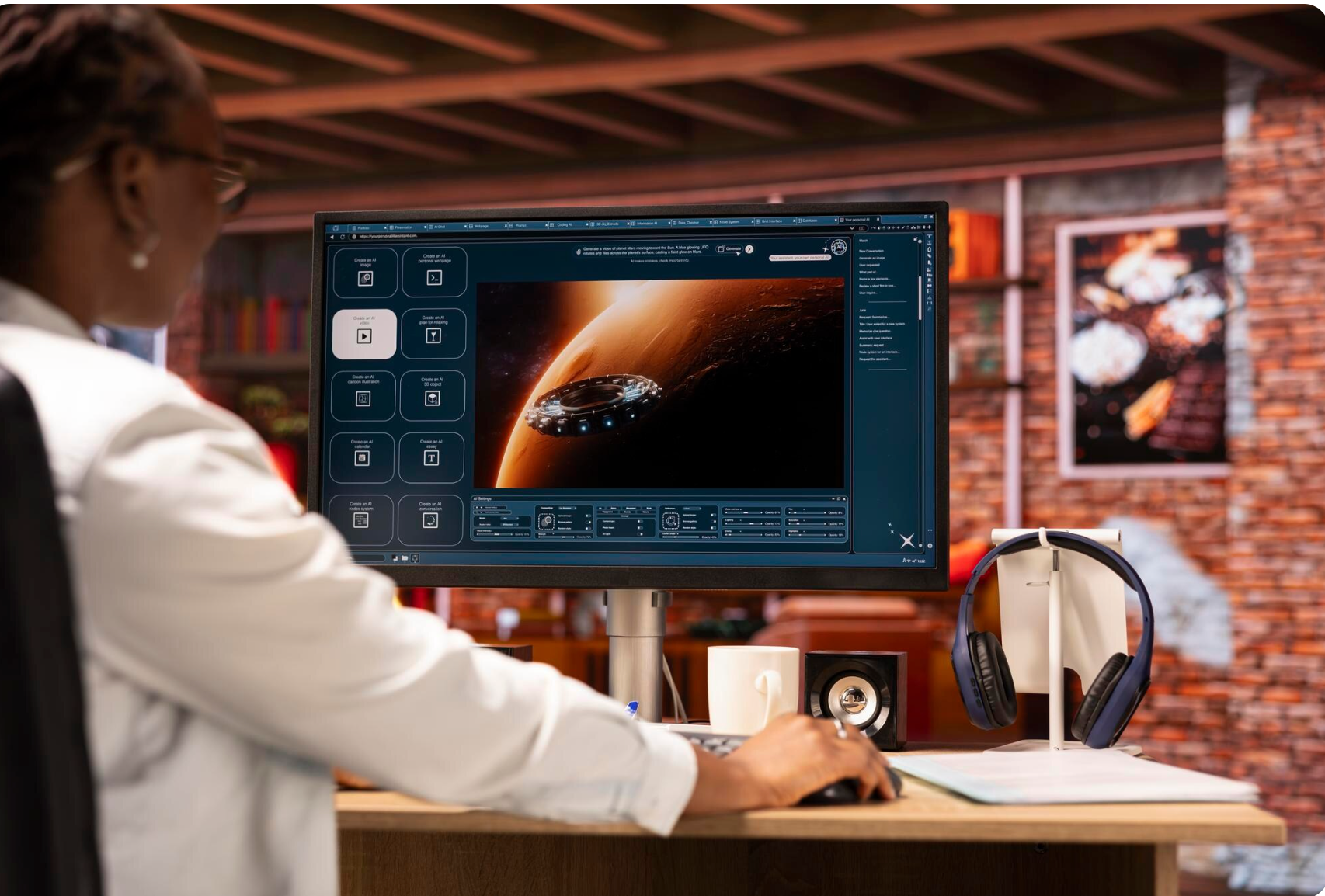
The advertising industry has long been defined by elaborate production timelines, substantial budgets, and extensive coordination among creative teams. Today, artificial intelligence is fundamentally altering this landscape, enabling the creation of high-quality TV commercials in a fraction of the traditional time. From initial concept development to final broadcast-ready output, AI tools are compressing workflows that once spanned weeks or months into days or even hours. This shift not only reduces costs but also allows brands to iterate rapidly, respond to market trends in real time, and experiment with creative variations at scale. As adoption accelerates into 2026, AI is emerging as a core driver of efficiency in commercial production.
The Momentum Behind AI Integration in Advertising
The transition to AI-assisted commercial production gained significant traction in the mid-2020s, propelled by advancements in generative models capable of producing realistic video, audio, and imagery. Early experiments demonstrated that AI could handle repetitive or resource-intensive tasks, freeing human creatives to focus on strategy and storytelling. By 2025, several major brands had aired partially or fully AI-generated spots during high-profile events, proving the technology’s viability for television audiences.
This momentum stems from the need for speed in a fragmented media environment. Traditional TV commercial production often involves lengthy pre-production planning, multi-day shoots, and exhaustive post-production editing. AI interventions address these bottlenecks directly, offering tools that generate assets on demand and automate labor-intensive steps. The result is a more agile process that aligns with the demands of modern marketing campaigns.
Core Technologies Enabling Rapid Creation
Several foundational AI technologies are at the heart of accelerated commercial workflows. Text-to-video generators, such as advanced models from platforms specializing in cinematic output, allow creators to produce entire scenes from simple descriptive prompts. These systems handle camera movements, lighting, and character animations with increasing sophistication.
Complementing video generation are AI-driven voice synthesis tools that deliver natural-sounding narration in multiple languages and accents. Image-to-video converters and avatar-based systems further expand options, enabling virtual presenters or digital twins without the logistics of physical talent. Editing suites enhanced with machine learning now automate rough cuts, color grading, and visual effects, while script-writing assistants refine copy based on brand guidelines and performance data.
Integrated platforms combine these capabilities into end-to-end solutions, where a single input—such as a product description or campaign brief—can yield a complete, broadcast-ready advertisement. This convergence of tools is what truly compresses timelines, turning complex productions into streamlined operations.
Optimizing Pre-Production Planning
Pre-production traditionally consumes the largest share of time in commercial development, involving scripting, storyboarding, casting, and location scouting. AI significantly shortens this phase by automating initial ideation and visualization.
Generative tools can produce dozens of script variations in minutes, tailored to target demographics or emotional tones. Storyboarding, once a manual drawing process, is now handled by AI that creates detailed frame sequences from text descriptions. Virtual set design and 3D modeling further eliminate the need for physical reconnaissance, allowing teams to preview environments digitally.
These advancements enable faster client approvals and reduce revisions. What might have taken days of brainstorming sessions can now be prototyped in hours, setting the stage for quicker transitions to active production.
Reimagining On-Set Execution
While fully virtual commercials are increasingly common, hybrid approaches still incorporate live elements. AI supports these by minimizing on-set demands. For instance, digital avatars and synthetic performers reduce the need for extensive casting and scheduling. Real-time generative effects can augment live footage, such as altering backgrounds or adding elements without reshoots.
In fully AI-generated spots, the “shoot” phase effectively disappears. Tools produce coherent video sequences directly, complete with consistent character movements and environmental details. This elimination of physical production logistics—travel, equipment setup, and crew coordination—represents one of the most dramatic time savings, often cutting weeks from the schedule.
Expediting Post-Production Refinements
Post-production has historically been the most time-intensive stage, involving editing, sound mixing, and effects integration. AI is transforming this area through intelligent automation.
Machine learning algorithms generate initial edits by selecting optimal clips, syncing audio, and applying transitions. Speech enhancement tools clean dialogue and add realistic intonation, while visual effects are rendered faster than traditional methods. Metadata tagging and compliance checks, such as for broadcast standards, are also automated.
These efficiencies allow for rapid iteration. Teams can test multiple versions simultaneously, incorporating feedback almost immediately. The outcome is a dramatically shortened path from rough cut to final master.
Standout Applications in Contemporary Campaigns
Recent campaigns illustrate the practical impact of these technologies. Several brands have deployed AI for holiday advertisements, creating emotionally resonant visuals across global markets with localized elements. Others have produced surreal, high-concept spots for major sporting events, achieving cinematic quality without proportional production scales.
Fashion and consumer goods companies have utilized digital twins and avatar presenters to showcase products in diverse scenarios. These examples highlight not only speed but also the ability to generate variations for different regions or audience segments, amplifying reach without multiplicative effort.
Prevailing Patterns in 2026
Looking at the current landscape, several patterns stand out. Hyper-personalization is gaining ground, with AI-generated commercials based on viewer data in near real time. Multi-modal generation—combining text, image, and audio inputs seamlessly—is becoming standard.
There’s also a rise in agentic systems that manage entire workflows autonomously, from brief ingestion to output delivery. Cost structures are shifting, with smaller brands accessing professional-grade production previously reserved for large budgets. These patterns suggest AI is democratizing high-end commercial creation while pushing boundaries of creativity.
Addressing Hurdles in Widespread Adoption
Despite the advantages, challenges persist. Maintaining brand consistency across AI outputs requires careful prompt engineering and oversight. Concerns around authenticity and consumer trust arise when audiences detect synthetic elements, necessitating transparent approaches.
Ethical considerations, including job displacement for traditional roles and the potential for misleading content, demand ongoing attention. Quality control remains essential, as generative outputs can occasionally produce artifacts or inconsistencies requiring human correction.
Projecting Forward: The Evolving Role of AI in Commercials
As capabilities advance, AI is poised to deepen its integration into TV commercial production. Expect even tighter workflows, with real-time collaboration tools and predictive analytics guiding creative decisions. Hybrid human-AI teams will likely dominate, leveraging technology for efficiency while preserving narrative depth.
The horizon points toward a more dynamic advertising ecosystem, where speed enables bolder experimentation and closer alignment with cultural moments. Ultimately, these developments promise to redefine how stories are told on television, making compelling commercials more accessible and responsive than ever before.